Okay, so check this out—I’ve been poking around Solana explorers for years. Whoa! Some are slick, others are clumsy. My gut kept nudging me toward one tool again and again. Something felt off about using multiple tabs to do what one dashboard should handle. Seriously?
At first glance Solscan looks tidy. My instinct said „fast and clean.“ But I didn’t trust that first impression. Initially I thought a pretty UI was enough, but then realized parsing token transfers, NFT metadata quirks, and on-chain staking events required deeper features. Actually, wait—let me rephrase that: surface polish matters, yes, but the real value is in the nitty-gritty data view and how quickly you can act on it.
Here’s the thing. When I’m tracking an NFT drop or monitoring a token mint, latency kills you. Quick refreshes are clutch. Hmm… the Solana network is fast, but if your explorer lags you’re already behind. I noticed Solscan usually renders recent slots and token balances faster than others I tried. I’m biased, but that speed is meaningful in practice. Also, some explorers hide details I want. Solscan doesn’t. It shows the TX details, account history, and the token program interactions in a way that makes sense—most times anyway. Sometimes it gets messy, but that’s Solana for you…
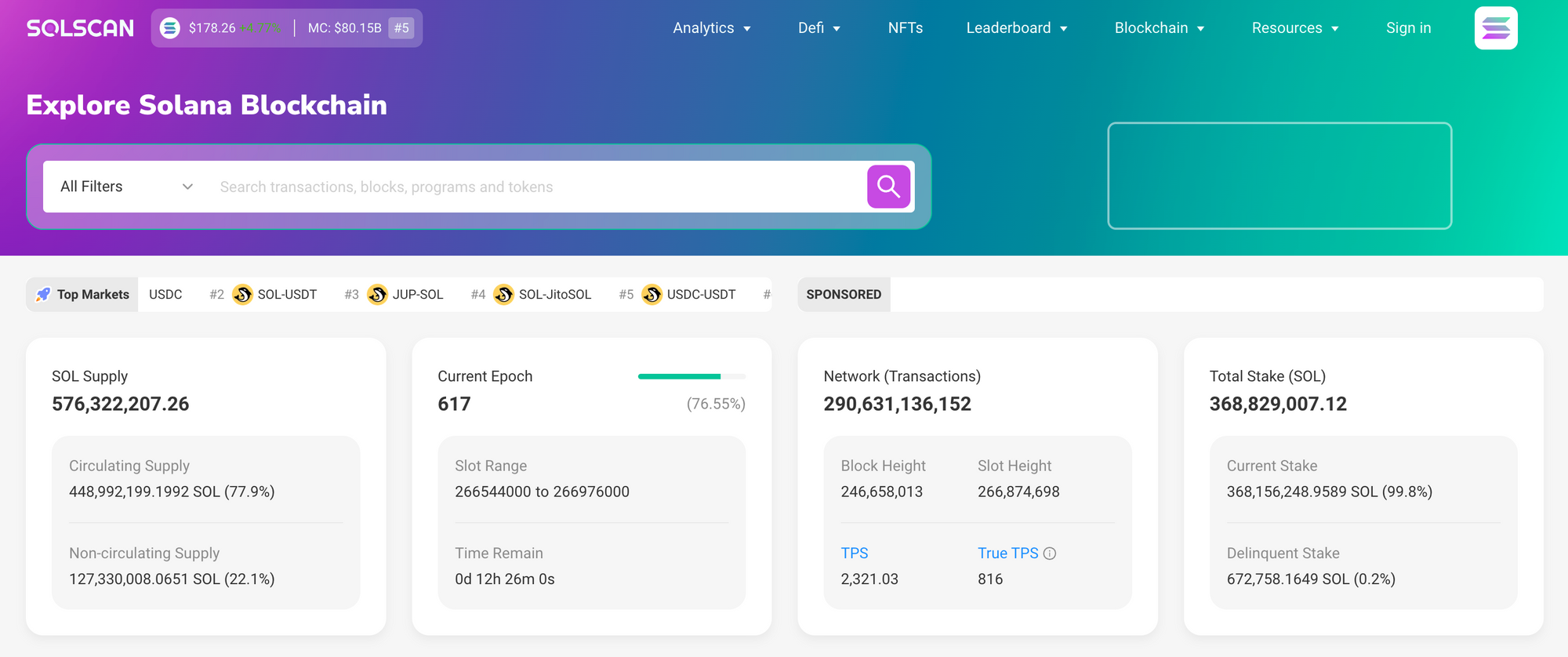
A closer look at NFT tracker and token tracker features (solscan explorer official site)
My workflow often starts with the NFT tracker. I open a mint address, check holders, then scan for suspicious activity. Short story: Solscan surfaces mint methods and token metadata quickly. Often I can see the collection attributes and off-chain URI links right from the token page. On the token tracker side, I like the balance history and holder distribution charts. They help me judge whether a token is tightly concentrated or fairly distributed. On one hand a concentrated supply means rapid price swings; on the other hand a wide distribution can point to healthy liquidity—though actually, that’s not always the case.
One time in a Bay Area coffee shop I watched a new token go from zero to trending while an influencer tweeted. Wild. My first thought was „pump?“ My second was to check holder concentration. Solscan made that quick. It displayed the top accounts and their relative holdings without too much fluff. That saved me from a dumb impulse trade. I’m not 100% sure that would have been impossible with other tools, but the speed and clarity mattered to me. Also, the token transfer breakdown gave me clues about token utility—airdrops, burns, or vesting schedules—things that change the risk profile fast.
Tracking NFTs is a different animal. Collections can be messy. Metadata sometimes points to IPFS, sometimes to CDN, and sometimes to nothing. Solscan’s token pages aggregate what exists, and the activity timeline shows mints, listings, sales, and transfers in one view. That combined timeline is where I live. It tells me if listings are increasing (pressure), or if people are pulling tokens off-market (tightening supply). I watch trends, but I also watch anomalies—like sudden transfers from brand-new wallets.
Whoa! Little moments like that—when a wallet suddenly moves hundreds of tokens—are gold. They hint at wash trading or coordinated offers. You can dig into the tx and see the originating program calls. That on-chain transparency is why I prefer Solscan’s approach. Not everything is perfect, somethin‘ will break sometimes, but most of the time it’s actionable.
On the developer/creator side, Solscan helps too. You can inspect smart contract interactions, view instruction logs, and verify program IDs. For engineers doing post-mortems or tokenomics audits, those details speed debugging. Initially I thought I needed a dedicated node to get deep data. Then I realized explorers like Solscan abstract a lot of that work away—saving time, or at least reducing friction.
There are trade-offs. No single explorer catches every edge case. On one hand Solscan gives fast, detailed reads; though actually, some rare contract events still require chasing raw logs or custom indexers. On the other hand, its UI surfaces more than enough for most users—collectors, traders, and analysts alike.
Another thing that bugs me: inconsistent metadata across explorers. You might see a name in one tool and nothing in another. Solscan tends to standardize naming fairly well, but it’s not infallible. Expect to cross-check occasionally. Double-checking is a habit worth keeping. Double-checking, always.
Tip-wise—if you’re using Solscan as your token tracker, make use of the address watch feature and alerts. I set up watches for a handful of wallets and tokens I care about. When something moves, I get a heads-up and can jump in. This method reduced my reaction time in several live trades. Seriously, it changed how I manage risk.
FAQ
Can Solscan reliably track new mints and rug-pulls?
Short answer: it helps a lot. The transaction timeline and holder distribution are the first flags. Longer answer: Solscan surfaces mint transactions, associated program calls, and immediate transfer patterns. Those indicators combined with off-chain signals (Discord, Twitter) usually give you enough to assess risk—though nothing is foolproof.
Is Solscan better for tokens or NFTs?
Both. It handles token flows and NFT metadata, but use-case matters. For rapid token transfers and distribution charts, it’s strong. For NFTs, the combined activity timeline and metadata aggregation are the wins. Pick based on the task, or use both views together.
Do I need to run a node?
No. You don’t have to run your own node to use Solscan effectively. The explorer indexes and presents the data, which is enough for day-to-day tracking and most analyses. For deep research you might still want raw RPC access, but most users won’t need it.