Whoa, this actually makes things clearer than I expected.
I clicked a tx hash and the page rendered structure before I could blink.
The layout groups instructions, accounts, and program logs in a way that feels intentional and tidy.
Initially I thought blockchain explorers would be all dense tables and cryptic hex dumps, but this one guides your eye so you can get to the meat quickly even if you started out nervous about on-chain data.
Something felt off about the first time I used it—my instinct said the timestamps were odd—but then the explanation popped up with slot and block time details, so I adjusted my assumptions.
Hmm… this is the part that surprised me the most.
I tested a token transfer, a program upgrade, and a cross-program invocation in rapid succession.
The explorer surfaced SEVERE logs when a program failed, showing the error and the call stack in plain text.
On one hand, that level of detail is a relief; on the other, it can be overwhelming the first few times you dig into it, especially if you’re used to UIs that hide everything.
Seriously, if you want to learn how a transaction flows across accounts and programs, the visual breakdown teaches faster than most docs do.
Okay, so check this out—tips from real usage.
First, always verify the slot and the confirmation status before assuming a transaction stuck; network congestion and RPC nodes differ.
Second, expand the instruction view to see program IDs and the exact account order, because token transfers depend on that order more than people expect.
Third, read the logs after transactions marked „failed“ to find the failing instruction and the error code; it’s usually obvious once you hunt for it.
I’ll be honest, those three steps cut my debugging time in half the week I was fixing a broken CPI call in a devnet deployment.
Whoa, tiny but crucial UI things matter.
The search bar accepts wallet addresses, tx signatures, block slots, and token mints, which makes jumping between contexts frictionless.
There are quick links to token holders and recent transfers that save mental context switching.
If you’re scanning a contract’s activity, the account activity feed surfaces program-derived accounts and related transactions without you having to stitch them together manually.
My bias: I prefer explorers that minimize clicks, and this one does that very very well.
Hmm, some tradeoffs to watch.
Not all RPC endpoints return identical parsed data, so sometimes the explorer shows a summary that’s slightly different from what your local RPC returns.
Initially I thought that was a bug, but then I dug in and realized it’s cache + preprocessed parsing on the explorer side—faster, but occasionally off from a raw RPC trace.
Actually, wait—let me rephrase that: the pre-parsed view is more readable for humans, though for forensic work you should cross-check with a raw RPC or your node’s logs.
So treat the explorer as your quick-read tool, not your sole source for legal or audit-grade proofs.
Whoa, little-known features you might miss.
You can filter transactions by program ID and then export results as CSV for offline analysis or compliance tasks.
There is a „token transfer“ view that collapses instructions into intuitive send/receive rows, which is great for chasing mints and airdrops.
The memos are easy to inspect too, which helped me trace off-chain identifiers we had included in several testnet runs.
Oh, and by the way… if you rely on program logs to decode custom errors, copy the log lines and paste them into your local decode helper to map error codes to enums.
Seriously, here’s a workflow I use when debugging.
Step one: paste the tx signature into the search field and confirm the slot and status.
Step two: open the instruction list, and identify which instruction index returned an error or unusual event.
Step three: click the related program account to inspect associated accounts and PDAs; often the root cause is a missing account or wrong signer.
If you follow those steps, you avoid the usual guesswork that makes somethin‘ feel broken when it’s just misordered accounts.
Whoa, don’t ignore the log timestamps.
They show microsecond resolution sometimes, which helps when you correlate on-chain events with off-chain processes like indexers or oracles.
If your backend shows a delay, check whether the slot time or confirmation count is the culprit before blaming RPC throughput.
One time I chased a latency bug for days before realizing the explorer’s cached view was faster than my local node’s block subscription, and that took forever to debug because I assumed parity.
That part bugs me—distributed systems are messy and timing is deceptive.
Hmm, a short rant: watch out for copied UIs that look similar but lack parsing.
My instinct said „trust but verify“ and that advice saved a client from misattributing token burns to the wrong program.
On one hand, explorers all show transactions; though actually, the difference is in parsing hierarchy, error messages, and the developer-friendly links to source code or verified programs.
If a transaction involves multiple CPIs, trace them in sequence and inspect each instruction’s pre- and post-account balances to confirm state changes.
This is where experience helps, and I’m not 100% sure everyone understands that nuance at first glance.
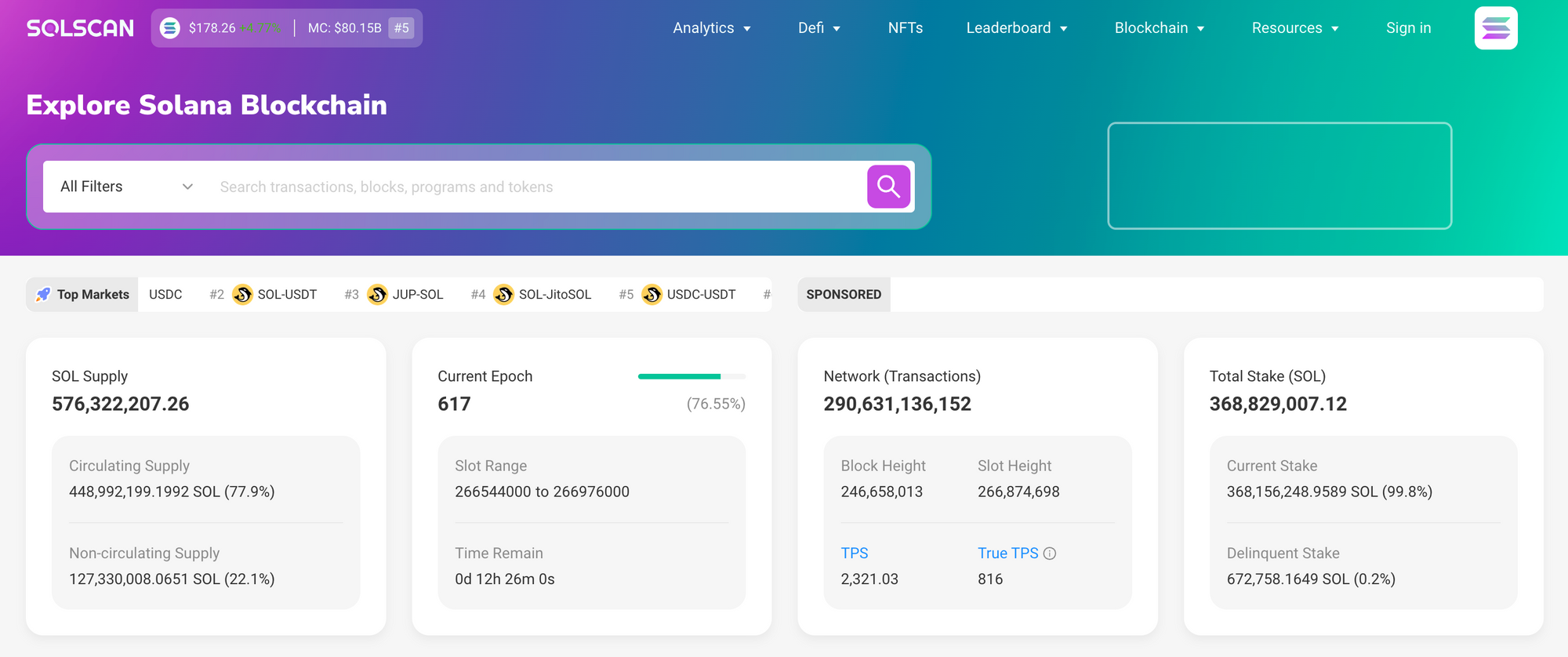
Practical recommendation: start using solscan for everyday checks
If you want a solid balance of speed and clarity, check solscan for quick reads and deeper dives.
Their token pages, holder lists, and contract activity threads are especially good for community research.
When auditing transactions, cross-reference the explorer’s parsed logs with a raw JSON RPC response to ensure no detail is lost in translation.
One more tip: save queries for recurring searches, because repeated manual filtering gets old fast and a saved filter saves minutes every day.
Whoa, final practical notes before you go.
If privacy is a concern, remember explorers index on-chain public data—your wallet address is visible to anyone who looks.
If you see unexpected token transfers, investigate fast; sometimes airdrops or phishing tokens populate your account before you realize.
For program developers, use devnet and testnet extensively and then watch the explorer while you run test transactions to learn how logs surface and how errors display to end users.
I’ll be blunt: nothing replaces hands-on testing with real txs, and the explorer is your friend during that process, not a replacement for good unit tests.
FAQ
How do I verify a transaction’s finality?
Check the confirmation status and slot number on the transaction page and match that against the current cluster head; higher confirmation counts mean greater finality, though Solana’s notion of finality is probabilistic, so for large transfers you might wait for multiple confirmations or cross-check on a validator you trust.
Can I rely solely on the explorer for audits?
No — use the explorer for rapid inspection and context, but always export or request raw RPC traces for audit-grade records; explorers are excellent for triage and human-readable traces, but they sometimes pre-process or cache parsed data which can differ from raw node output.